
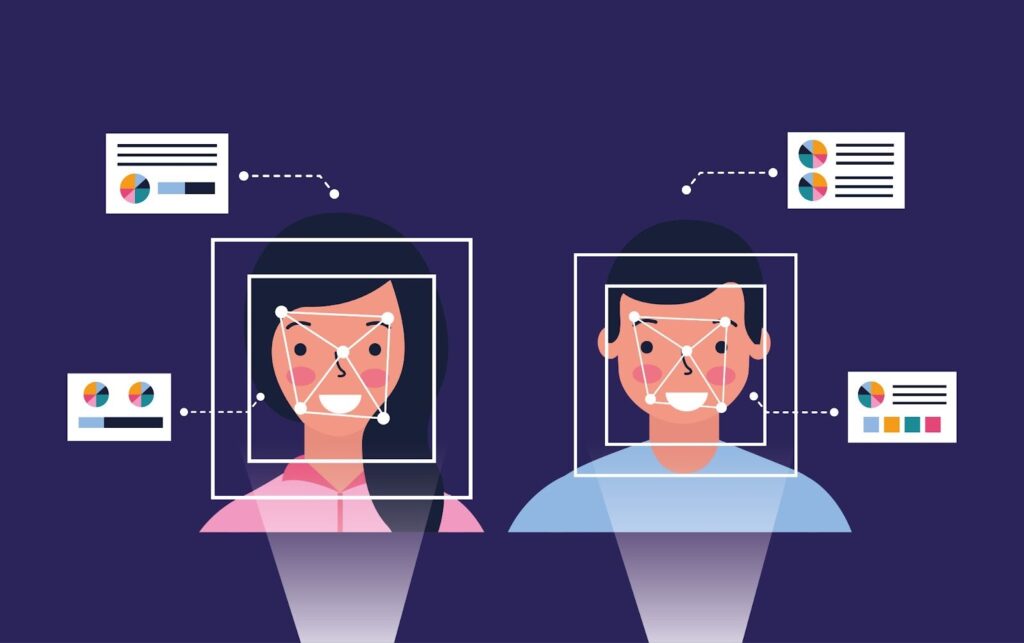
If you have ever tried an image-to-video AI tool, you may have noticed something interesting. Some videos look surprisingly lifelike, with natural movement and believable expressions. Others feel stiff, uncanny, or obviously artificial. This difference is not random.
The realism of image-to-video AI depends on several technical and creative factors working together. Understanding what influences these results can help creators, marketers, and businesses choose better tools and create more convincing video content.
What does “realistic” actually mean in image-to-video AI?
Realism in image-to-video AI refers to how closely the generated motion matches natural human or environmental behavior. It is not about perfect visuals alone.
A realistic result shows smooth movement, consistent proportions, believable timing, and expressions that align with the context. According to a 2023 MIT Media Lab study, viewers are far more sensitive to unnatural motion than minor visual imperfections. Motion quality often matters more than image sharpness.
Why does the quality of the input image matter so much?
The AI can only work with what it is given. Poor input leads to weaker output.
High-resolution images with clear lighting, visible facial features, and natural proportions give AI models better reference points. Blurry images, extreme angles, or heavy filters confuse motion prediction systems. Studies from Adobe’s AI research team show that clearer input images can improve perceived realism by over 30 percent in generated video results.
How do training datasets affect realism?
AI models learn motion by studying massive datasets. The quality and diversity of that data directly impact results.
Models trained on diverse facial structures, body types, lighting conditions, and movement styles tend to generate more natural results. Limited or biased datasets often produce repetitive or awkward motion. According to Stanford AI research, models trained on broader datasets reduce visual artifacts and unnatural motion patterns by nearly 40 percent.
Why does motion modeling make such a big difference?
Motion modeling determines how the AI predicts movement across frames. This is where realism is often won or lost.
Advanced systems analyze micro-movements like subtle head shifts, blinking, breathing, and posture changes. Simpler models rely on basic animation rules that can feel robotic. Research in computer vision shows that humans notice inconsistencies in motion within the first 300 milliseconds of viewing, making accurate motion modeling essential.
How does facial expression mapping impact realism?
Facial expressions are one of the hardest elements for AI to recreate convincingly. Small errors feel immediately unnatural.
Realistic image-to-video AI maps muscle movement rather than just moving facial landmarks. This allows expressions to flow naturally instead of snapping between positions. A 2024 study on synthetic media found that expression smoothness was the top factor influencing whether viewers perceived a video as realistic or artificial.
What role does frame interpolation play?
Frame interpolation controls how smoothly motion transitions from one frame to the next. Poor interpolation leads to jittery or jumpy movement.
Higher-quality AI models generate intermediate frames that maintain consistent motion and proportions. Lower-quality systems often stretch or distort features between frames. According to NVIDIA research, improved frame interpolation can increase perceived realism by up to 25 percent in AI-generated video.
Why do lighting and shadows matter in image-to-video AI?
Lighting consistency is crucial for realism. Even small lighting mismatches can break the illusion.
When motion is added, shadows and highlights must shift naturally. Advanced models account for light direction and intensity changes during movement. Inconsistent lighting is one of the most common reasons AI videos look fake, according to a 2023 survey of professional video editors.
How does background complexity affect results?
Busy or complex backgrounds make realistic motion harder to achieve. The AI must separate foreground from background accurately.
Simple or blurred backgrounds allow cleaner motion prediction. Complex environments with overlapping objects increase the chance of distortion. Research from Google AI indicates that simplifying backgrounds can improve motion accuracy by nearly 20 percent in image-to-video generation.
Where do advanced image-to-video AI tools fit in this landscape?
Some tools combine stronger motion modeling, better datasets, and refined interpolation techniques. This combination leads to more consistent realism.
In the middle of many creative workflows, tools like image to video AI by Viggle AI are used to turn static images into animated videos with smoother motion and more natural timing. These tools focus on aligning expressions, body movement, and transitions to avoid the stiffness seen in simpler systems.
Why does timing and pacing influence realism?
Real movement has rhythm. When AI-generated motion happens too fast or too evenly, it feels unnatural.
Natural motion includes pauses, acceleration, and subtle delays. High-quality AI systems model this variability. According to animation studies, perfectly linear motion is one of the strongest signals of artificial animation, even when visuals look sharp.
How does overprocessing reduce realism?
Adding too much motion or exaggeration often backfires. Subtlety usually looks more real.
Overanimated facial expressions, excessive head movement, or dramatic gestures make videos feel cartoonish. A 2024 creator survey found that videos with restrained motion were rated as more realistic than those with aggressive animation, even when using the same AI model.
Can user control affect how realistic results look?
Yes, user input plays a significant role. Even the best AI needs thoughtful direction.
Choosing appropriate motion styles, avoiding extreme prompts, and matching motion to context improves results. Creators who treat image-to-video AI as a collaborative tool rather than a one-click solution consistently produce more realistic output.
Why do some AI results improve over time?
Many image-to-video AI platforms continuously update their models. Each iteration improves motion accuracy.
As models learn from more data and real-world feedback, realism increases. Industry forecasts suggest that AI-generated video realism improves by measurable margins every 6 to 12 months as models evolve and hardware advances.
What mistakes commonly lead to unrealistic results?
Unrealistic results often come from a combination of poor input and unrealistic expectations.
Common issues include low-quality images, extreme angles, cluttered backgrounds, and forcing complex motion from a single frame. Understanding AI limitations helps creators set realistic goals and avoid disappointment.
What does the future look like for realistic image-to-video AI?
Realism will continue to improve as models become more context-aware and physically accurate.
Experts predict that by 2027, over 80 percent of AI-generated video will reach near-photorealistic motion for everyday use cases. Advances in physics-based modeling and real-time feedback loops will further close the gap between AI-generated and traditionally filmed video.
Conclusion
The difference between realistic and unrealistic image-to-video AI results comes down to data quality, motion modeling, timing, and thoughtful use. When these elements align, AI-generated videos can feel surprisingly natural. When they do not, the results quickly fall into the uncanny valley.
As image-to-video AI continues to evolve, understanding these factors helps creators make smarter choices and produce better outcomes. Realism is not just about better technology. It is about using that technology with intention, restraint, and a clear understanding of how motion works in the real world.