
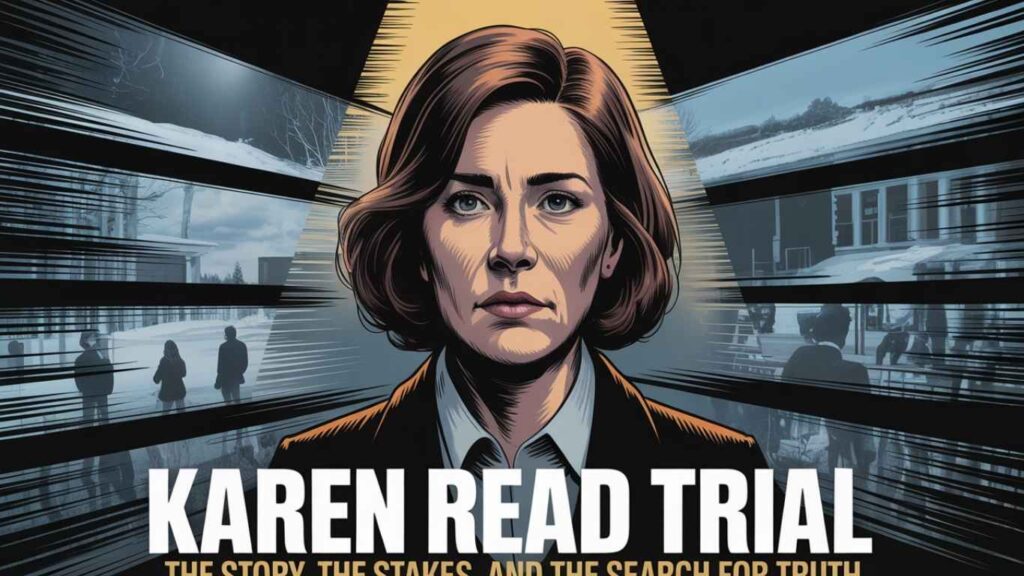
At its core, this case is about a woman accused of a terrible crime: the death of her Karen Read Trial , Boston police officer John O’Keefe. Karen Read is standing trial for second-degree murder, accused of hitting O’Keefe with her SUV and leaving him to die in the snow outside a fellow officer’s house in Canton, Massachusetts, in January 2022.
But as with any good courtroom drama, the story doesn’t stop at the surface. What started as a tragic incident has evolved into a legal labyrinth involving conflicting reports, allegations of a cover-up, and questions about who is really telling the truth.
Meet the People at the Center of the Case
To follow this trial, it’s important to understand the key players involved.
Karen Read – The Accused
A former finance professor and equity analyst, Karen Read was in a romantic relationship with O’Keefe. She claims she’s Karen Read Trial and insists she’s being framed. Her defense argues that someone else killed O’Keefe—and that powerful people might be involved in hiding the truth.
John O’Keefe – The Victim
John was a respected Boston police officer with 16 years of service. On the night of his death, he and Read were supposed to attend a gathering at a friend’s house. He never made it back home alive.
Brian Albert – The Host of the Party
O’Keefe was found outside the home of Brian Albert, another Boston police officer. The prosecution claims O’Keefe was dropped off by Read and struck by her car. But the defense paints a different picture, suggesting the real crime happened inside the house.
A Night That Changed Everything
So, what exactly happened that night?
According to the prosecution, Read dropped O’Keefe off at the house party, made a U-turn, and accidentally hit him with her SUV. Then, they argue, she drove off, leaving him in the snow—injured and eventually dead.
The defense tells a much different story. They argue that O’Keefe was already inside the house and that something violent happened there. Then, instead of getting help, the story goes, the people in the house covered it up—and shifted the blame onto Read.
It’s a tale of two narratives, and the jury must decide which one holds up.
The Investigation: Questions and Controversies
Let’s be honest: from the start, things have looked… messy.
Chain of Evidence Concerns
One major issue has been the handling of evidence. The SUV that allegedly struck O’Keefe was not towed and Karen Read Trial immediately. Surveillance footage is missing. Some say investigators were too quick to focus on Read and ignored other leads.
Forensic Evidence: Conflicting Findings
There’s also been debate over injuries to O’Keefe’s body. While the state says his wounds are consistent with being hit by a vehicle, the defense argues the injuries—like deep cuts and trauma—could point to an altercation or fall down stairs.
In any case, what should’ve been a clean investigation has become a muddy mystery.
Is There a Cover-Up? The Defense Thinks So
Here’s where things get really heated.
Karen Read’s legal team claims this isn’t just about one death—it’s about a system protecting its own. They’ve suggested that because police officers were involved in the party that night, there’s been a deliberate effort to hide the truth and frame Read as a scapegoat.
Imagine trying to solve a puzzle where some of the pieces are being held back. That’s the metaphor many are using to describe this trial—a puzzle missing its corners.
The Media’s Role: Trial by Public Opinion
The Karen Read case has exploded on social media, with hashtags, opinionated threads, and even amateur “investigators” posting theories online. TikTok, Reddit, and Facebook have become alternate courtrooms, with users picking sides like it’s a sporting event.
This public scrutiny has made it harder for the actual court to do its job. Jurors are supposed to stay unbiased, but can you truly ignore what’s trending online?
Emotional Toll and Community Impact
Beyond the headlines and drama, this is a deeply human tragedy. Two families—O’Keefe’s and Read’s—have been pulled into a legal whirlwind. Friends, neighbors, and even people far removed from the case have felt the emotional weight of the story.
People in the small town of Canton say the community feels divided. Friendships have been strained. Trust in local law enforcement is at stake. It’s no longer just a trial; it’s a community crisis.
Legal Strategies in the Spotlight
The Prosecution’s Approach
The state is leaning heavily on technical evidence: phone records, vehicle damage, and eyewitness testimony. Their narrative hinges on proving Read acted recklessly—and that her actions directly led to O’Keefe’s death.
The Defense’s Strategy
The defense is going all-in on reasonable doubt. Their goal is not just to question the evidence but to flip the script entirely. By suggesting foul play from inside the house, they want jurors to believe Read is the victim of a conspiracy.
Why This Case Matters Beyond Massachusetts
You might be asking, “Why should I care about this trial?”
Because it touches on bigger issues we all care about—like how justice works, who gets protected, and what happens when powerful systems are accused of wrongdoing. This case is a mirror reflecting concerns about law enforcement integrity, due process, and public accountability.
It’s not just about guilt or innocence. It’s about trust.
What Happens Next?
As of now, the trial is still ongoing. Witnesses are being called, evidence is being presented, and emotions are running high. It could take weeks—or even months—before a verdict is reached.
No matter the outcome, this case will leave a mark. It’s already influenced conversations about how we investigate crimes, treat defendants, and hold public officials accountable.
The Verdict’s Ripple Effect
Whatever the jury decides, the implications will ripple far beyond the courtroom. If Read is found guilty, expect questions about whether justice was truly served. If she’s acquitted, those who believe in the original police version may feel betrayed.
In either case, the community—and the country—will be left grappling with some tough questions.
Conclusion: More Than Just a Murder Trial
The Karen Read trial is about more than a woman, a man, and a tragic night. It’s about the threads of truth and lies, tightly wound and tangled in the fabric of a small town. It’s about the shadows cast when institutions come under scrutiny.