
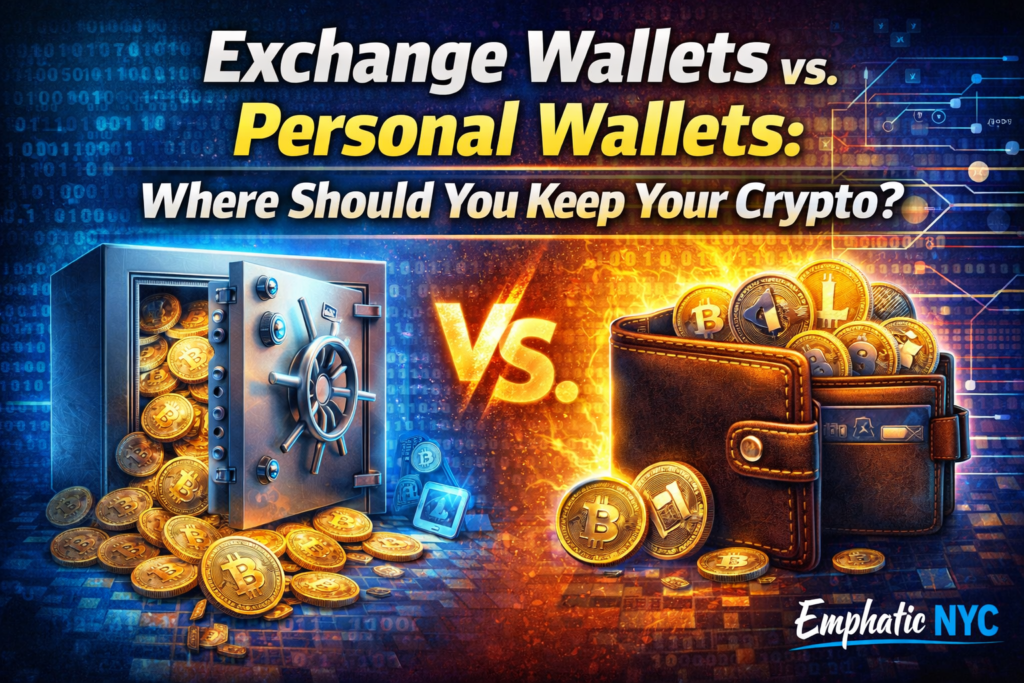
Every crypto investor faces a clear question after a first purchase. That moment brings a pause, since custody shapes daily access and confidence. At that point, the common question appears: “Now that I own it, where should I keep it?”
Two paths stand in front of each holder, and each path serves a distinct habit. One option keeps assets on the exchange that handled the purchase, known as an “exchange wallet”. The other option places assets in a wallet under direct control, known as a “personal wallet”.
The goal of this guide is to present clear details that cover the pros, cons, and ideal user for each option. It supports an informed decision tied to personal security needs and trading style. It also explains how the security measures behind a top-tier exchange wallet, such as the one at Swyftx, make it a secure choice for most Australians.
The Exchange Wallet (Custodial): Convenience and Security Handled for You
- What It Is:
A custodial wallet functions as a primary storage solution for digital assets on trading platforms. Users purchase cryptocurrency, and the service provider holds these assets within a secure infrastructure. This arrangement means the platform acts as the custodian for all private keys. It simplifies the process for individuals who prefer a managed approach to asset storage. The system operates much like a traditional bank account for digital currencies. This structure allows for a seamless user experience without technical hurdles.
The platform manages the complex backend security protocols for its clients. It takes full responsibility for the protection of the sensitive data that controls the funds. Users access their accounts through standard login credentials rather than complex cryptographic codes. This setup provides a familiar environment for those new to the crypto space.
- The Pros:
- Extreme Convenience: Assets remain ready for immediate trades, which removes delays. Therefore, portfolio actions stay quick and efficient. Private key care does not fall on the account holder.
- Password Recovery: Account access remains recoverable through platform support systems. Therefore, forgotten passwords do not cause permanent loss of access.
- No Self-Management: Individual users do not need to store complex seed phrases. The burden of security rests with the professional service provider. This eliminates the fear of a lost physical backup.
- The Cons (The “Not Your Keys” Argument):
The phrase “Not your keys, not your coins” reflects a core idea within crypto culture. It explains that asset control links directly to private key possession. With a custodial wallet, trust shifts to the exchange systems. Asset access depends on platform custody rather than individual key control.
- The Swyftx Difference:
Not all exchange wallets follow the same operational standards. A regulated Australian platform such as Swyftx applies structured safeguards that support user confidence. These measures rely on formal oversight, strong storage practices, and verified security frameworks. Together, these elements shape a controlled custodial environment. Key practices include:
- Being AUSTRAC registered.
- Holding the vast majority of funds in offline “cold storage.”
- Having ISO 27001 certification and undergoing third-party security audits.
The Personal Wallet (Non-Custodial): Total Control, Total Responsibility
- What It Is:
A personal wallet refers to a digital setup where private keys remain under sole user authority. This setup appears as a software app, such as Trust Wallet or a hardware device, such as Ledger or Trezor. Access depends on a 12 or 24-word seed phrase. Therefore, ownership is entirely on the holder. No external platform manages access. Control remains direct at all times.
- The Pros:
- Complete Self-Custody: The owner possesses 100% power over their digital funds at all times. No external company has the authority to freeze these assets or block transactions.
- Immune to Exchange Hacks: Funds stay within a private environment rather than on a central platform. A security breach on a trade site does not affect these personal assets. This separation ensures that coins remain safe from external platform failures.
- The Cons:
- The Seed Phrase is Everything: “If you lose your 12-word seed phrase, your crypto is gone forever. There is no password reset. There is no one to call.”
- Personal Responsibility for Security: The owner must protect the device from malicious software or scams. Vigilance against fraudulent schemes is a constant requirement for the user. Successful defense against these threats relies on individual effort. This duty ensures the safety of the private keys.
- Inconvenience for Traders: Sale of assets requires a move back to a trade platform. This process consumes time and involves various network fees. Frequent participants find this extra step quite cumbersome. It adds a layer of manual effort to every trade.
So, Which One is Right for You? A Simple Framework
- Keep it on the Exchange if:
- You are still learning the basics and prefer guided access with simple controls.
- You trade actively and need instant access to sell or swap.
- You hold a relatively small amount and place trust in your chosen exchange security.
- You use a top-tier, secure platform such as Swyftx.
- Move it to a Personal Wallet if:
- You are a long-term “HODLer” with no immediate plans to sell assets for several years.
- You hold a significant amount that represents a large portion of your overall net worth.
- You feel disciplined and prepared to manage your seed phrase safely without outside support.
- You want to interact with DeFi applications directly without intermediaries.
The Hybrid Strategy: The Best of Both Worlds
- The Pro Approach:
Expert investors seldom select a single storage method. These individuals frequently employ both custodial and personal options. This dual path creates a balance between access and safety. It allows for a versatile management of digital wealth.
- The Strategy:
- Trading Capital: Keep active funds on a secure, liquid exchange like Swyftx for immediate market access and swift trade execution.
- “Cold” Savings: Transfer long-term assets (your “savings”) to a hardware device for maximum protection. This practice creates a secure vault for core wealth.
- The Benefit:
This structure provides the necessary ease for trade execution. It also ensures the highest level of safety for the main holdings. Users enjoy the speed of an exchange for daily tasks. Simultaneously, their primary savings remain under their direct control.
Conclusion
Summary: There is no single “best” answer within wallet choice discussions today. The right option links to trade habits, comfort levels, and technical confidence. Each setup serves a clear role within crypto use. Some users prefer simplicity through managed access on a trusted platform such as Swyftx. Others value direct authority through self-held access. Both paths remain valid within structured use.
The Key Takeaway: The debate focuses less on “exchange vs. personal” selection. Focus instead shifts toward “secure vs. insecure” setup choices. Strong systems depend on correct use practices. Safe access stems from careful setup discipline.